
15 DIY Yarn Bowl Ideas: Easy Household Substitutes
A smooth bowl with a binder clip on its rim is a simple yarn-bowl substitute. The bowl contains the ball, and an open clip handle can guide the strand. Leave enough room for an outside-pull ball to turn, and check that the yarn slides without catching.
You can also use a basket, tote, mug or clean food container. The right choice depends on the size of your yarn ball, whether it unwinds from the center or outside, and whether the container needs to travel with your project. These fifteen ideas use items you may already have.
Choose a container for the yarn you’re using
| Your yarn or project | Useful starting point | Check first |
|---|---|---|
| Outside-pull ball | Wide bowl and binder clip | Room for the ball to rotate freely |
| Center-pull cake | Wide-mouth food jar or storage tub | No catching at the rim or lid |
| Several colors | Basket with separate containers inside | Strands can feed independently |
| A project already on the needles | Open bowl or tote | An open guide lets you remove the strand |
A closed hole can trap the working strand. A teapot spout or drainage hole usually needs to be threaded with the free yarn end before you start. If your yarn is already attached to a project, an open guide is easier to add or remove without cutting it.
15 household yarn-bowl ideas
1. Storage basket
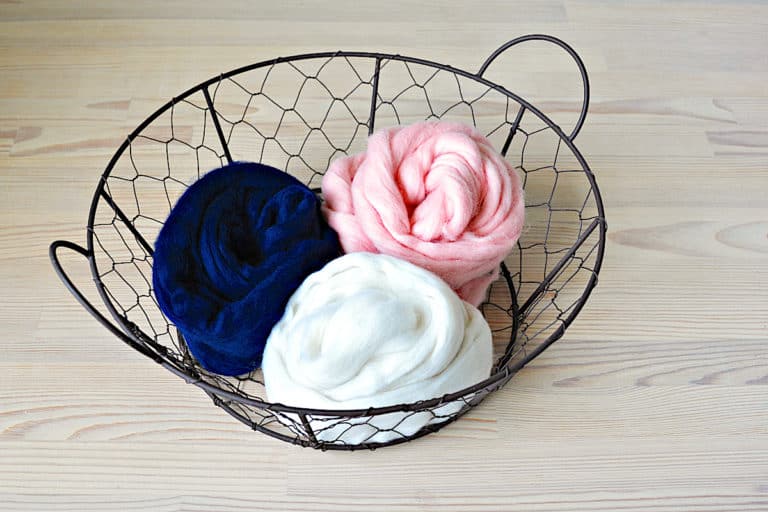
Put the yarn in a smooth basket and let the strand pass over the rim. Woven edges can catch fuzzy yarn, so inspect the inside and handles first. For colorwork, place each ball in its own small bowl or bag inside the basket. This keeps the balls separated, although you’ll still need to manage crossed strands as you change colors.
2. Clean plant pot
An unused, clean pot can cover a ball when turned upside down, with the yarn feeding through a drainage hole. Check that the hole and rim are smooth and the ball has room underneath. Don’t force bulky or fuzzy yarn through a rough opening. This closed-hole arrangement is less convenient when you want to remove the yarn mid-project.
3. Bowl with a binder clip
Attach a binder clip to a rim that it fits without excessive force. Raise one wire handle to use as a guide. On a clip with a removable handle, you can take the handle off, place the strand inside it and reattach it. Check that the clip doesn’t mark the bowl and that the yarn avoids the spring mechanism. A heavy, wide bowl is a useful starting point.
4. Tote bag
A clean tote can hold the yarn and the rest of your project together. Rest it beside your chair or hang it where the handles won’t pull it over. Feed the strand through the open top, keeping it clear of any zipper or hook-and-loop fastening. If the yarn catches on the lining, use a smooth container inside rather than assuming all natural fibers need a different bag.
5. Soup mug
A broad soup mug can hold a small ball or cake. Let the yarn pass over a smooth rim, or thread the free end through the handle before beginning. The handle is a closed guide, so you won’t be able to lift an attached strand out of it later. Avoid packing the mug tightly around an outside-pull ball; it needs space to turn.
6. Water pitcher
A dry pitcher with a wide opening can contain yarn that keeps rolling away. Try the pouring lip as a guide, leaving the lid off if it pinches the strand. Narrow pitchers may restrict an outside-pull ball even when they look tall enough. Choose one that stands securely as the yarn feeds rather than treating height alone as an advantage.
7. Teapot
A clean, dry teapot is an option for a small ball, but check the full yarn path through the spout. An internal strainer can obstruct it, and a narrow passage may catch textured yarn. Thread the free end before starting and keep the pot stable. If the yarn drags, use an open bowl instead; extra friction is not a benefit to aim for.
8. Colander
A smooth colander can hold several balls. Feed strands over the rim or through large, smooth openings that suit the yarn. Test with the actual strand rather than assuming every hole works for sock yarn. Burrs, seams and small holes can snag fibers; choose another container if you feel resistance. Separate the balls if they keep rolling together.
9. Zip-top bag
Place a small ball in a clean bag and leave the top partly open for the strand. Don’t close the zipper onto the yarn. This works as a portable pouch, but it may need support so it doesn’t slide around. Check that the ball can unwind without pressing against the bag, and open it farther if the feed becomes tight.
10. Wide-mouth food jar
A clean, dry food jar with a wide opening is an alternative to cutting a soda bottle. Use it without the lid and let the strand pass over the rim. A center-pull cake can sit inside, provided you can reach its yarn end comfortably. Check for ridges or damage around the opening, and use a wider container if the ball rubs against the sides.
11. Paper towel holder
A weighted holder may support a suitable yarn spool with a hollow core. The spool must fit the rod and rotate freely. Don’t push the rod through an ordinary ball or center-pull cake: it can interfere with unwinding, and not every yarn shape works like a paper towel roll. If you don’t have a compatible spool, choose a bowl or basket instead.
12. Food-storage tub
A clean food-storage tub is a useful replacement for a reused cleaning-wipe container. Leave the lid off and use the smooth rim, or choose an existing lid opening that doesn’t pinch the strand. A wide tub suits larger balls better than a narrow bottle. You don’t need to cut a new hole just to keep the yarn contained.
13. Tissue box
An empty tissue box can hold a small ball if the opening lets it unwind freely. Remove any plastic film that catches the yarn. A reusable cover that opens underneath is easier to load than a sealed cardboard box. Lightweight boxes may move as you pull; place one inside a basket rather than adding a restrictive yarn hole to hold it still.
14. Lidded drink cup
A washed, dry drink cup can hold a small cake. Use the lid only if its opening is smooth and wide enough for the yarn. Some straw slots grip rather than guide a strand, so test the feed first. Match the cup to the ball; a large drink cup won’t necessarily fit bulky yarn or allow an outside-pull ball to rotate.
15. Coffee container
A clean coffee container with a smooth, undamaged rim can hold a larger ball. An open top is enough; drilling or poking a lid isn’t required. Avoid exposed sharp metal edges and check that the inside is dry and free of residue. If the container is light enough to slide, place it in a stable basket or switch to a heavier bowl.
Check the feed before settling in
Pull out a short length of yarn as you normally would while knitting or crocheting. The strand should move without jerking the container, squeezing the ball or catching on an edge. If it drags, check the opening and the space around the ball. A yarn bowl contains yarn; it should not be used to create extra tension in your stitches.
Wind a loose hank before loading the container. Lion Brand’s yarn-packaging guide explains why a hank needs to be wound into a ball before use. Center-pull cakes and outside-pull balls behave differently, so adjust the container rather than pulling harder. For several colors, leave each strand its own path and pause to untwist them as needed. A basket cannot prevent every colorwork tangle.
When a purpose-built yarn bowl makes sense
If household containers keep snagging or sliding, compare purpose-built ceramic yarn bowls. Check the room for your ball, base stability and smoothness of the yarn guide. An open slot lets you lift an attached strand out; a closed hole requires threading the free end. Those details matter more than decoration alone.
For a longer craft project, you can also make a crocheted basket or explore clay for handbuilding. Those are separate making projects, while the household options above are for containing yarn now.
Related: Knitting stitch holder substitutes explains how to hold live stitches when you need to put part of a project aside.