
How To Make A Cloak From A Blanket – 6 Easy Steps
A blanket can become a hooded cloak, but check the layout before cutting. Lay out the back, two front pieces and hood on paper first, including the seam allowances and finished edges. A bed size alone does not tell you whether every piece will fit.
You can work from a cloak pattern or adapt the outline of a hoodie. If you choose a commercial pattern, follow its measurements, fabric suggestions and cutting layout. The six steps below describe the hoodie-based approach; they are not a substitute for the instructions supplied with a purchased pattern.
Start with a blanket you already own if it suits the project. Before buying one, compare its actual dimensions, thickness and drape with your planned cloak. Test a seam on a scrap before sewing the garment.
As an Amazon Associate, we earn from qualifying purchases.
How to Make a Cloak from A Blanket – What You Need
Here is everything you need in order to start making your cloak with that beautiful blanket that you’re converting.
1. Blanket
The main thing you need to make a cloak from a blanket is a blanket. You can use one you already have or buy a new one.
Blanket types and current linked sizes to compare: These are starting points for checking a layout, not a guarantee that one blanket will make your chosen cloak.

Microplush blanket
Check the current price on Amazon.
- The linked EASELAND queen fleece blanket is listed as 90 × 90 inches.
- Its listing describes microfiber fleece with a smooth side and a plush side.
- Check the selected size and care instructions. Test how the fabric feeds through your machine before committing to the cloak.

Sherpa fleece blanket
Check the current price on Amazon.
- The linked Bedsure black sherpa blanket is currently the 60 × 80-inch twin version.
- It is listed as 100% polyester, with flannel on one side and sherpa on the other.
- Check the bulk at the hood and shoulder seams. Do not assume a sherpa blanket has no stretch or that it cannot bunch.
Cotton thermal blanket

Check the current price on Amazon.
- The linked COTTON CRAFT ivory blanket is currently the 90 × 102-inch king version.
- Its listing describes 100% cotton in a herringbone twill weave.
- Follow the care label before cutting and plan a finish for cut edges. Check the exact size selected on the product page.
2. Pattern
The linked Simplicity S1582 pattern makes hooded capes in different lengths. Simplicity rates it Average, so check its size chart, suggested fabrics and required fabric amount before choosing it. A thick blanket is an adaptation, not a fabric compatibility claim from this guide.
3. Sewing kit
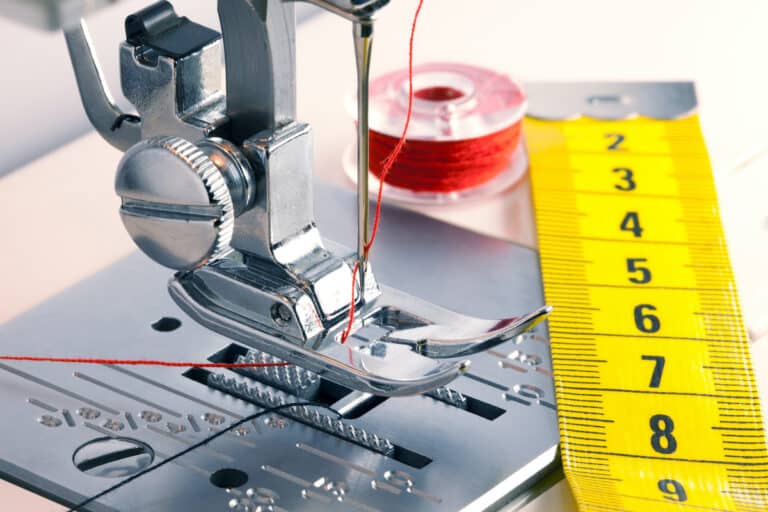
You will need a fabric pencil, measuring tape, pins, needles, and thread. Check that your kit includes the right needle and thread for the blanket, plus scissors that can cut its thickness.
A sewing machine is very helpful, but not a necessity. You can easily make a cloak from a blanket with just a needle and thread.
How to Make a Cloak from a Blanket – 6 Easy Steps
Here are the six steps for planning and sewing a hooded cloak from a blanket.
1. The Back
If you are using a hoodie as your pattern, you can use it as it is or rip out the seams. Taking the hoodie apart will make it look more like a pattern and might be easier to use. Leaving it in one piece just means that you have to make allowances for the seam.
- Place the hoodie on a piece of paper and trace around the edges.
- Tuck in the hood. If you want a hood on your cloak, you can worry about that later. For now, let’s just concentrate on the actual cloak.
- The body part of the hoodie will be the basic shape of the cloak. The cloak will be much longer, so don’t worry about the bottom of the hoodie.
- Just trace around the shoulders. Keep in mind that your cloak will not have any sleeves, so the arms of the hoodie need to be included as part of your outline.
You now have the basic silhouette of the back of a cloak. Cut out the pattern and the back part of your cloak is ready.
2. The Front Piece
Tape the pattern of the back onto another piece of paper. Draw around the outside. Mark your planned seam allowance and front-edge turnback on the paper before cutting.
The front part for your neck should be a bit deeper than the back. Carefully cut the piece out of the paper and the front is ready.
3. The Hood
You can get very creative with the hood. It can be any shape you like. A rounded hood that drapes your neck? Maybe a pointed hood?
- First, draw the basic outline by tracing the hoodie you are using for your pattern.
- Check that the hood neckline and the cloak neckline match along their stitching lines before cutting. Do not rely on an approximate match at the raw edges.
Now you can make the rest of the hood any way you like. Only the neckline should stay the same. Cut the shape from the paper, making sure to leave enough room for the seam.
Fun Fact: Did you know you can add a hood to a jacket? Check out my DIY article here.
4. Cutting Out the Cloak
Fold your blanket in half lengthwise and lay the pieces of the back section with the straight edge on the fold. The blanket will be right sides in so that you can trace the cutting line on the wrong side.
With some blankets, especially fleece, it’s hard to tell the wrong side from the right, so just use your best judgment.
- Measure out the desired length of your cloak and extend the curved side to this point. Don’t just draw straight down.
- Make sure you have a curve at the top for your shoulders.
- Include space for the seam and cut out the back part of the cloak.
- Place the front pieces of the pattern on the folded blanket but not on a fold. You will still have the right sides facing each other while you trace the pattern onto the wrong side of the fabric.
- Put the cut piece of the back section over the front piece to make sure the curve and length are the same and then trace the curve.
- Remove the back piece and trace the neckline of the front piece of the pattern.
- Include the seam allowance and front-edge turnback marked on your pattern; do not add them a second time.
- Cut out the two front pieces.
- Put the pattern of the hood on the folded blanket.
- Draw the shape onto the fabric, adding enough extra for the seam all around.
- You can make the tip larger or smaller, pointed or round. Just remember to leave the neckline as it is.
- Optional: You can add slits down either side of the front for your hands to get out if you like. Carefully cut the same length on both sides and hem around the edges.
- If you are using the type of fabric that doesn’t need hemming, then you’re all set. You can just leave it as it is.
5. Sewing Time
If all of the previous steps have gone smoothly, then the sewing up will be easy!
- Put the two pieces of the front over the pieces for the back with the right sides facing together.
- Stitch all the way down both sides.
- Pin the two sides of the hood together with the right sides facing in and stitch them together.
- Fold in about half an inch on either side of the opening and stitch.
- Optional: Attach the hood to the cloak.
Finish off the extra edges of the front piece by folding it over and sewing it together. Finish off the two open sections of the front sides by folding them over and sewing them together.
6. The Closure
The easiest and most common type of closure is the hook and eye fastener. It is simple to sew on and can not be seen from the outside. You will want to sew this on by hand.
You can now decorate the outside of the closure with a button, brooch or any type of cute ornament you have on hand.
You don’t have to use the hook and eye closure. You can use any type of fastener you like. Instead of a decorative button, you can put in a real button and buttonhole.
And that’s it! Your blanket is now a cloak.
AyeCarlie on YouTube makes a super easy-to-follow cloak tutorial using a microfiber blanket. Check it out!