
Best Glues For Ceramic Repair
A broken piece of ceramic is one of the few repairs where the glue choice really decides the outcome. The break is clean, the two faces have to line up almost perfectly, and whatever you use is going to be visible forever if you pick wrong.
What are the best glues for ceramic repair? A clear two part epoxy is the right answer for anything structural, like a handle or a base, because it fills the gap and cures rigid. A thin super glue is better for hairline cracks and clean chips, where the two faces already meet and you just need them locked together.
Below are the eleven I would actually reach for, split by the kind of break you are dealing with, plus the food safety question everyone asks and almost nobody answers properly.
Buying Guide
Match the glue to the break, not to the brand you already own. There are really only four categories worth knowing.
- Two part epoxy. The strongest option and the only one that fills a gap. Use it for handles, bases, anything that carries weight.
- Cyanoacrylate, or super glue. Fast and nearly invisible on a clean break. Useless if the faces do not meet, because it has almost no gap-filling ability.
- Food contact safe silicone. Flexible and genuinely rated for food contact, which almost nothing else here is.
- Kintsugi kits. For when you want the repair to show on purpose.
Two things matter more than the glue itself. Clean both faces with rubbing alcohol and let them dry completely, and dry-fit the pieces before you open anything, because you get one attempt at alignment with a fast epoxy.
Quick Picks
| Glue | Best for | |
|---|---|---|
| J-B Weld ClearWeld | Structural breaks, best overall | Check it on Amazon |
| Gorilla 2 Part Epoxy | Easiest to find | Check it on Amazon |
| PC Products PC-Clear | Longer working time | Check it on Amazon |
| Araldite Clear Epoxy | Fine antique repairs | Check it on Amazon |
| Loctite Ultra Gel Control | Vertical breaks | Check it on Amazon |
| Gorilla Super Glue Gel XL | Bigger jobs | Check it on Amazon |
| Gorilla Micro Precise | Hairline cracks | Check it on Amazon |
| Y’allCanDiy Ceramic Glue | Thin wicking CA | Check it on Amazon |
| Porcelain Super Glue Gel | Chips and small parts | Check it on Amazon |
| Silicone RTV 4500 | Food contact safe | Check it on Amazon |
| CHIYU Kintsugi Kit | A visible, decorative repair | Check it on Amazon |
Best Epoxies For Structural Ceramic Repair
If the broken part has to hold anything, this is your category. Epoxy cures into a rigid solid inside the joint, so it carries load across the break rather than just bonding two surfaces.
1. J-B Weld ClearWeld 5 Minute Epoxy

This is the one I would buy first. It dries genuinely clear rather than the yellowish tint a lot of epoxies settle into, and the double syringe meters both parts evenly so you are not eyeballing the mix.
It sets in about five minutes and reaches full strength overnight. At 4.6 stars across nearly 9,900 ratings it is also the best-reviewed clear epoxy in the category.
2. Gorilla 2 Part Epoxy

The most available epoxy on this list, and it does the job. It holds 4.5 stars across more than 11,000 ratings.
The separating barrel is the useful part. Unused resin and hardener stay apart, so the second half of the syringe is still good months later, which is not true of every brand.
3. PC Products PC-Clear Epoxy

Pick this when the repair has more than two pieces. The working time is longer than a five minute epoxy, which sounds like a small thing until you are holding four fragments and the glue is going off.
It cures water clear and sands well once hard. 4.5 stars across nearly 3,900 ratings.
4. Araldite Clear Epoxy

Araldite is the one restorers have used on ceramics for decades, and it is the finest of the epoxies here. It runs thinner than the syringe types, so the glue line almost disappears on a tight break.
It comes in two tubes rather than a metered syringe, so mix equal amounts carefully. 4.6 stars across more than 2,300 ratings.
Best Super Glues For Cracks And Chips
For a clean break where the faces meet properly, super glue is faster, thinner and less visible than epoxy. It has almost no gap-filling ability, so if you can see daylight through the joint, go back to epoxy.
5. Loctite Super Glue Ultra Gel Control
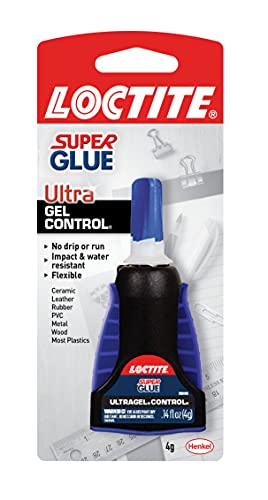
The gel does not run, which is the whole point when the break is on a vertical surface like the side of a vase. It also has a little flex once cured, so it survives being knocked better than a brittle liquid does.
With 4.6 stars across more than 22,000 ratings, this is the most-reviewed product on the page.
6. Gorilla Super Glue Gel XL

Same idea in a much bigger bottle, which matters if you are repairing more than one thing. The anti-clog cap is the reason to buy this over a cheaper tube, because the usual way a super glue dies is a welded-shut nozzle.
4.6 stars across more than 40,000 ratings.
7. Gorilla Micro Precise Super Glue Gel

The precision tip is the reason this exists. On a hairline crack you want a bead you can actually aim, not a blob that squeezes out both sides and has to be cleaned off the glaze.
4.6 stars across roughly 2,100 ratings. Buy it alongside a bigger bottle rather than instead of one.
8. Y’allCanDiy Ceramic Glue Repair

A thin cyanoacrylate sold specifically for pottery and porcelain. Thin is the useful property here, because it wicks into a crack you have already closed up rather than holding the two halves apart.
Tape the piece together first, then run the glue along the seam and let capillary action do the work. 4.4 stars across almost 4,500 ratings.
9. Porcelain Super Glue Gel

The gel version of the same idea, for chips and small broken-off pieces where a thin glue would just run away. It gives you a few seconds to position the fragment before it grabs.
4.6 stars across just over 700 ratings.
Best Food Safe Option
10. Silicone RTV 4500 Food Contact Safe Sealant
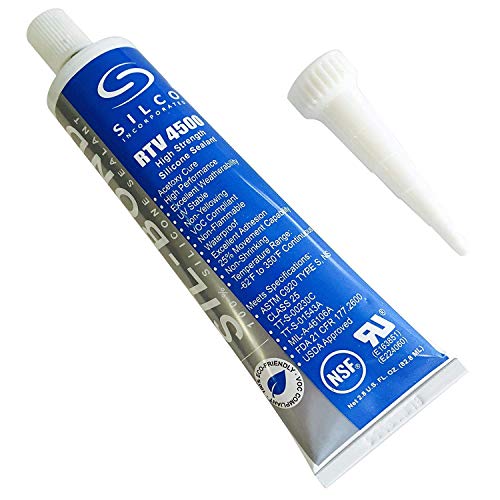
This is the only product here with a real food contact rating, and it is the honest answer to the question everyone asks about repairing a favourite mug.
It is silicone, so it stays flexible and it is not structural. It seals rather than bonds, which makes it right for a planter or a lid and wrong for a handle.
Be honest with yourself about the mug. A repaired drinking vessel is a decorative object now, whatever you glued it with. 4.5 stars across more than 5,800 ratings.
Best For A Repair You Want To Show Off
11. CHIYU Kintsugi Repair Kit

Kintsugi is the Japanese practice of repairing pottery with gold so the break becomes the most interesting thing about the object. If the piece is already broken and already sentimental, this beats trying to hide it.
This kit sits at 4.5 stars across just over 400 ratings, which is a small field. Kintsugi kits are a thin category on Amazon and nothing in it has both a high rating and a big review count, so I picked the highest-rated one rather than the most-reviewed.
Expect it to take an evening rather than five minutes. That is the point.
Tips For Repairing Ceramic
- Dry-fit everything first. Lay the pieces out and work out the order before you open the glue. With a five minute epoxy you get one go.
- Clean both faces with rubbing alcohol. Old glue, dust and skin oil all stop a bond forming. Let it dry fully.
- Glue from the inside out. On a multi-piece break, start with the fragments that lock the shape and work outward.
- Use tape as your clamp. Masking tape across the seam holds pressure without marking the glaze.
- Scrape squeeze-out when it is rubbery, not wet or hard. There is a window a few minutes in where it lifts off cleanly with a blade.
- Leave it overnight. Set time is not cure time, and ceramic repairs fail because people test them too early.
Frequently Asked Questions
What is the strongest glue for ceramic?
A two part epoxy. Epoxy fills the gap it sits in and cures into a rigid solid, so it carries load across the break instead of just sticking two faces together. Super glue is stronger per square millimetre but only works when the two faces meet almost perfectly.
Is any ceramic glue food safe?
Some are, but read the label rather than assuming. Food contact safe silicone is the clearest case. Most epoxies and super glues are only considered safe once fully cured, and none of them belong on a surface that touches hot food or goes through a dishwasher.
Can you fix a chipped ceramic mug?
Yes, if you still have the chip. Thin super glue is the right choice because it wicks into the gap without bulking it out. A missing chip needs a filler instead, and at that point you are restoring rather than gluing.
How long does ceramic glue take to set?
Five minute epoxy holds in about five minutes and reaches full strength in roughly 16 to 24 hours. Super glue grabs in under a minute. Either way, leave the piece clamped or taped overnight before you put any weight on it.
Related Articles