
Best Glue for Rocks: 6 Craft and Repair Options
The right glue for rocks depends on the shape of the joint and where the finished piece will go. A small decorative pebble, a broken stone ornament and a garden sculpture can need different adhesives. Start with the materials and exposure listed on the package, then check how long the joint needs to stay supported.
This post contains affiliate links. As an Amazon Associate, we earn from qualifying purchases.
For small, close-fitting decorative joints, compare a medium cyanoacrylate glue such as Starbond. For stone repairs with gaps, look at a suitable two-part epoxy. Original Gorilla Glue is another option for close-fitting outdoor joints, but it expands and needs clamping. Waterproof wording alone does not establish that an adhesive is suitable for aquariums.
Glues for rocks: quick comparison
| Glue | When to compare it | Main consideration |
|---|---|---|
| Gorilla Original | Close-fitting outdoor crafts | Expands; dries tan; needs clamping |
| Starbond Medium CA | Small decorative joints and quick repairs | Short adjustment time; check the fit first |
| Akfix 710 stone kit | Fast stone and marble assembly | Test for staining; activator needs careful handling |
| Epoxy 330 | Clear stone, gem and jewelry repairs | Mix two parts; allow the joint to harden |
| Loctite Instant Mix 5 Minute | Small repairs and gap filling | Not for continuous water immersion |
| J-B Weld ClearWeld | Clear epoxy repairs | Keep unmixed components separate for storage |
1. Gorilla Original polyurethane glue

Gorilla Original is worth comparing for an outdoor decorative project when the rock surfaces fit closely and you can hold them firmly together. The linked product is the brown, 8-ounce Original formula. It is water-activated and expands as it cures, so keep it away from areas where visible foam would spoil the finish.
Gorilla’s directions call for clean, tight-fitting surfaces, a light amount of water on one surface and a thin layer of glue on the other. Clamp for one to two hours and allow 24 hours to cure. It dries tan. The manufacturer’s outdoor waterproof claim should not be treated as approval for an aquarium.
2. Starbond Medium CA glue

The two-ounce Starbond Medium Pro Kit is a useful option to compare for small decorative joints where the pieces meet closely. Its medium consistency is easier to place than a very thin glue, and the kit includes precision tips. Arrange the pieces before applying it: a fast-setting glue gives you little time to change their position.
Follow the package’s full curing instructions before handling the finished piece. Avoid treating the initial grip as proof that the joint can carry a heavy load or remain underwater. Starbond’s safety sheet for this exact product also warns against contact with fabric and paper goods, which can generate heat as the glue reacts.
3. Akfix 710 Stone and Marble kit
Akfix 710 is specifically intended for natural stone, marble, granite and decorative stone. It combines a thicker cyanoacrylate adhesive with an activator. The linked listing contains two kits, each with glue and spray activator, so check the pack size before ordering.
The manufacturer’s product page describes fast bonding and a formula that stays in place on vertical surfaces. Its instructions call for adhesive on one surface, activator on the other and firm pressure for about a minute. Test an inconspicuous spot first, especially on pale marble or granite: the retail label warns that staining can occur. Do not assume that a clear glue leaves every stone unchanged.
4. Epoxy 330

Epoxy 330 is a clear two-part adhesive sold for bonding stone, gems, glass, ceramics and metal findings. That makes it a sensible option to compare for a small stone ornament or jewelry repair where the glue line will show. The linked pack contains two half-fluid-ounce tubes.
EuroTool describes the formula as thickening in about 15 minutes and hardening in two hours. Those are different stages, so mix only what you can apply within its working time and follow the package instructions for the finished joint. Check the package before painting the repair or exposing it to water. A clear glue line and a fast hardening time do not establish those uses.
5. Loctite Instant Mix 5 Minute epoxy
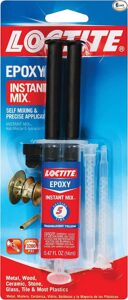
Loctite Instant Mix uses a mixing nozzle to combine its two components as you dispense them. The linked listing is a two-pack of 0.47-fluid-ounce syringes. It starts setting in five minutes, reaches handling strength in about an hour and lists a 24-hour full cure in the technical sheet for item 1365868.
The same sheet excludes continuous immersion, continuously wet areas and exposure above 120°F. It is a small-repair option, not an aquarium recommendation. Loctite’s marketing page and technical sheet differ on paintability, so confirm the instructions for your package before painting over the repair.
6. J-B Weld ClearWeld

ClearWeld is a clear, two-part epoxy with a one-to-one mixing ratio. The linked listing is the two-pack of 25-milliliter syringes, model 50112-2. J-B Weld specifies a five-minute set and a one-hour cure for the 25-milliliter formula, with a stated tensile strength of 3,900 PSI. That laboratory figure does not tell you the safe load for an irregular rock joint.
Mix resin and hardener in the supplied tray as directed. The cap lets you store the unmixed components remaining in the syringe. It cannot stop already mixed epoxy from curing, so prepare a small batch rather than saving a tray of mixed glue for later.
How to choose and use rock glue
Check the joint before choosing a formula
Dry-fit the pieces and look at their contact area. A quick-setting glue is easier to use when the surfaces meet closely. A gap-filling epoxy can be more practical when a broken ornament has an uneven joint, provided its label includes the materials you are joining. Original Gorilla Glue needs tight-fitting surfaces despite its foaming action.
Remove dirt, loose material and old adhesive where the product instructions require it. Follow the preparation directions for that formula; some call for dry surfaces, while Original Gorilla Glue calls for light dampening. Support the joint through its stated set and cure times.
Separate outdoor use from aquarium use
Check the exact adhesive’s limits for rain, heat and immersion. An outdoor waterproof claim does not establish suitability for aquatic life or drinking-water systems. For an aquarium project, use a product expressly intended for that application and follow its curing directions. None of the choices here is being recommended as an aquarium adhesive.
Give the glue time to cure
Working time tells you how long you have to place and adjust the parts. Set time describes the initial grip; handling strength and full cure can come later. Keep the piece supported for the period the manufacturer specifies, and do not test its strength by pulling on the joint early.
Read the safety instructions for the exact product
Read the label and safety sheet before opening the glue. Follow its ventilation, eye protection and glove requirements. Keep cyanoacrylate away from skin, fabrics and paper towels, and keep spray activators away from ignition sources. For heavy, suspended or otherwise safety-critical stonework, get project-specific guidance from the adhesive manufacturer.
Can you use wood glue on rocks?
Titebond III is designed for woodworking. Its manufacturer’s guidance concerns wood joints and excludes continuous submersion and structural or load-bearing uses. Those uses do not establish suitability for rock-to-rock bonding. Choose an adhesive whose instructions include stone.
Related articles
For a painted pebble project, compare rock painting kits and markers for rock painting. A broken ceramic ornament needs different considerations; see our guide to glues for ceramic repairs.
Working on another small craft? We also have a guide to spray glues for LEGO projects.